From Thomas Birch Freeman’s Canoe to the Church of Nigeria: A Complete Historical Record
The Methodist Church in Nigeria stands at the intersection of three of the most consequential currents in 19th-century history: the British evangelical revival that produced the Wesleyan missionary movement, the transatlantic slave trade and its abolition, and the extraordinary homecoming of freed African captives who had made Christianity their own in exile and carried it back to the land of their birth. Without all three of these forces converging at precisely the right historical moment, the Methodist Church’s arrival in Nigeria in September 1842 would not have been possible, and the church that has grown from that arrival into one of the most significant Christian institutions in West Africa would not exist.
The history that follows is not the story of a European institution extending itself into Africa. It is the story of an African people reclaiming their homeland and, in the process, permanently transforming both the land they returned to and the religious tradition they brought with them. The Saro community whose petition brought Thomas Birch Freeman to Badagry were not passive recipients of a foreign faith. They were active agents who invited, shaped, and ultimately took ownership of a movement that the historical record too often credits exclusively to European missionaries.
I. The Roots: John Wesley and the Wesleyan Methodist Tradition
The Methodist Church that arrived in Nigeria in 1842 was the institutional product of a spiritual revolution that had swept through Britain a century earlier. John Wesley, born in 1703 in Epworth, Lincolnshire, as the fifteenth child of the Reverend Samuel Wesley and his formidable wife Susanna, had by the time of his death in 1791 transformed the religious landscape of the British Isles more thoroughly than any single individual since the Reformation.
Wesley’s own transformation, which he dated to the evening of May 24, 1738, when he attended a Moravian meeting in Aldersgate Street in London and felt his heart strangely warmed during a reading of Luther’s preface to the Epistle to the Romans, gave him the experiential certainty of God’s grace that no amount of rigorous Anglican observance had previously provided. He had been a priest, a missionary (an unsuccessful one, to Georgia in the American colonies), and a devout Christian for years before Aldersgate. What changed after it was not his theology but the authority with which he could communicate it: he now spoke from experience rather than from doctrine alone.
The Doctrinal Distinctives of Methodism
Wesley’s theological position distinguished itself from the Calvinist Reformed tradition, which dominated much of English Nonconformity, on several crucial points. Where Calvinist theology emphasised the absolute sovereignty of God in the election of particular individuals for salvation, Wesley maintained an Arminian position: that God’s grace was prevenient and universal, offered to all people, and that each person had genuine freedom to respond to or resist the divine call. This doctrinal position made Methodist preaching inherently inclusive and evangelistically urgent in a way that stricter Calvinist predestinarianism made more difficult.
Wesley’s doctrine of sanctification, sometimes called entire sanctification or perfect love, held that the converted Christian could through the work of the Holy Spirit progress beyond justification toward a state of heart-purity in which love for God and neighbour dominated the will completely. This was not a claim to sinless perfection in the sense of being incapable of error, but a claim about the orientation of the will and the heart. This emphasis on the transformative work of grace in the ongoing life of the believer, rather than merely in the moment of initial conversion, gave Methodism a social ethic of extraordinary energy: if grace could genuinely transform human hearts, then transformed people would transform their communities, and the Church had an obligation to work toward that social transformation.
Wesley himself demonstrated the social dimension of Methodist faith through his organisation of the Methodist societies into a sophisticated structure of classes, bands, and circuits that provided mutual accountability, pastoral care, financial support, and educational opportunity to the working-class communities from which most of his converts came. Methodist chapels became centres of literacy as well as devotion, and the Methodist tradition produced a disproportionate number of 19th-century social reformers, trade union leaders, and political activists who had been formed in the crucible of the Wesley class meeting.
The Wesleyan Missionary Society and the African Call
The Wesleyan Methodist Missionary Society, founded in 1786 and reorganised on a more formal basis in 1818, was among the earliest of the British evangelical missionary organisations. By the 1830s, it had established missions in the Caribbean, in South Africa (where the work of John Philip and others among the Khoikhoi people had generated significant controversy), in India, and in the Gold Coast (modern Ghana), where the missionary Thomas Birch Freeman had been building a remarkable indigenous church since his arrival in 1838.
The path from the Gold Coast to what is now Nigeria was opened not by the Wesleyan Missionary Society’s strategic planning but by the insistent requests of the Saro community that had settled in Badagry and Abeokuta. These returned Yoruba captives, many of them converts from the Methodist and Anglican traditions of Sierra Leone, wrote to the missionary societies in Britain and to Freeman directly, pleading for ministers and teachers. They had the faith, they had the community, they had the buildings in some cases. What they needed was ordained clergy who could administer the sacraments.
II. Thomas Birch Freeman: The Founder of Nigerian Methodism
Thomas Birch Freeman is not as well known outside West Africa as Samuel Ajayi Crowther, whose episcopal consecration made him a more visible symbol of indigenous African Christianity. But in terms of the practical work of establishing a permanent, rooted Methodist presence across the full sweep of what is now Nigeria and Ghana, Freeman’s achievement was extraordinary, and his personal story carries its own remarkable quality.
Freeman was born in 1809 in Twyford, Hampshire, England, to an English mother and an African father, William Freeman, who had been brought to England from Africa and had found employment as a gardener. Thomas received a solid English education, trained as a horticulturalist, and was converted to Methodism in the 1820s. His application to the Wesleyan Missionary Society in the 1830s was accepted, and he was ordained and sent to the Gold Coast in 1838, where the death of the previous missionary from malaria had left the church without leadership.
Freeman’s own wife died of malaria within months of their arrival in Cape Coast, but Freeman did not leave. He buried her, prayed through his grief, and continued working with a tenacity and a pastoral warmth that built one of the most effective indigenous church networks in West Africa. His mixed heritage gave him a particular quality of cultural understanding: he was neither fully inside nor fully outside either the African or the European world, and he used that position as a bridge rather than allowing it to become a barrier.
The Journey to Badagry: September 1842
Freeman’s arrival at Badagry on the southwestern coast of what is now Lagos State in September 1842 was not an unplanned venture. He had been receiving letters from the Saro community in Badagry for months, pleading for a Methodist minister to come and serve their congregation. The community had already organised itself, was holding regular prayer meetings and services, and had built a meeting place. What it needed was ordained ministerial oversight and the full sacramental life that only an ordained minister could provide.
Freeman arrived by canoe through the coastal lagoon system, a journey that required days of travel through the creeks and waterways that connected the Gold Coast to Badagry. With him came the Reverend William de Graft, a Fante Methodist minister from the Gold Coast, demonstrating from the very first moment that the Methodist mission to Nigeria was an African-led enterprise as much as a European one. The reception they received testified to the depth of the Saro community’s preparation: there was already a congregation waiting, already organised, already worshipping, already committed.
The first official Methodist service in Nigeria was held on September 24, 1842. The date marks the beginning of organised, continuous Methodist presence in the territory that would become Nigeria. Freeman’s account of the service, recorded in his journals, describes a congregation of several hundred, drawn from the Saro community and from local Badagry residents who had been attending the informal services the Saro had been holding, singing Methodist hymns with the same fervour he had witnessed in his Gold Coast congregations.
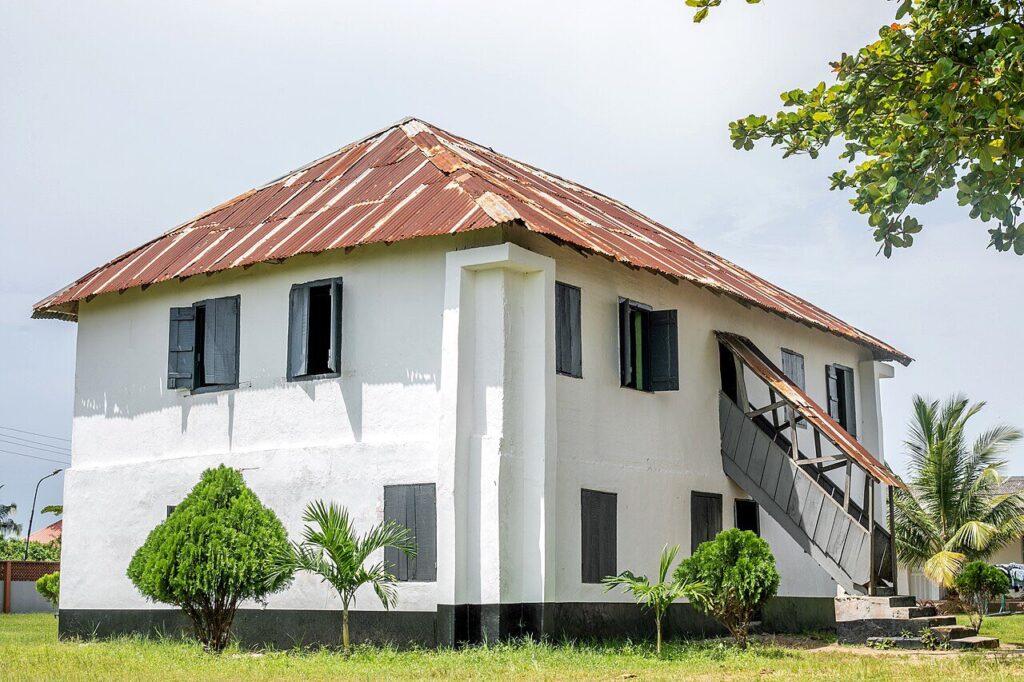
| Badagry, Lagos State: The first landing point of organised Christianity in Nigeria. The heritage sites of early Methodist and CMS missions remain in the town. |
The Extension to Abeokuta: 1842-1843
Freeman did not remain long in Badagry on his first visit. Having established the foundation and left William de Graft to lead the congregation, he pushed inland toward Abeokuta, the walled Egba city approximately 60 miles north of Lagos that had become the primary destination of the Yoruba returnees. His reception at Abeokuta was facilitated by the Saro community already resident there, who introduced him to the Alake Sodeke, the paramount ruler of the Egba confederation.
Sodeke’s reception of Freeman was warm and politically astute. The Alake understood that the missionaries brought with them not only a religious message but connections to the wider world, potential access to British political and military protection against the Dahomean raids that periodically devastated the Egba region, and the educational resources that literacy offered. He granted the missionaries permission to work, to build, and to establish a school. This was the beginning of the Abeokuta mission that would become, over the following decades, the most important single centre of Methodist activity in Yorubaland.
Freeman made multiple return visits to the Nigeria region through the 1840s, extending the mission and maintaining pastoral connections with the growing congregations. Each visit was followed by the arrival of additional missionaries, both British and African, who built on the foundation he had laid. His published account of his journeys, Journals of Various Visits to the Kingdoms of Ashanti, Aku, and Dahomi in Western Africa, published in 1844, brought the realities of West African mission to a British public and generated both interest and financial support for the work.
III. The Saro Community: The Human Foundation of Nigerian Methodism
Any account of the Methodist Church in Nigeria that places Thomas Birch Freeman at the centre misrepresents the actual dynamic of the founding period. Freeman was a catalyst and a symbol, but the foundation was the Saro community, and the specific character of Nigerian Methodism, its intensity of communal life, its emphasis on education, its deep roots in Yoruba cultural identity, was shaped by the Saro experience far more than by the directives of the Wesleyan Missionary Society in London.
Who the Saros Were
The Saros were Yoruba men and women who had been captured during the wars accompanying the collapse of the Oyo Empire in the 1820s and 1830s, transported to the coast, placed on Portuguese or Brazilian slave ships, and intercepted by the Royal Navy’s West Africa Squadron. Landed at Freetown in Sierra Leone, they received education, Christian instruction, and community support from the missionary organisations and the liberated African community already established there. Many of them attended the Fourah Bay Institution, precursor to Fourah Bay College, which provided secondary and higher education to the most able students in the Sierra Leone settler community.
The Saro community in Sierra Leone maintained a strong sense of Yoruba identity and an intense longing to return home. As the political situation in Yorubaland gradually stabilised in the late 1830s and 1840s, many of them made the journey back to the coast of what is now Nigeria, settling first in Badagry and rapidly moving inland toward the towns and villages from which they or their parents had been taken. They brought with them English literacy, professional skills, Christian faith, and a dual cultural identity that gave them a unique position in the developing commercial and intellectual life of Lagos and the Yoruba interior.
The specifically Methodist character of a significant portion of the Saro community reflected the denominational profile of the Sierra Leone missionary work: Wesleyan Methodist missionaries had been among the most active in Sierra Leone, and many of the recaptives had been converted and formed in Methodist chapels and class meetings there. When they returned to Nigeria, they organised themselves in the same pattern they had known in Freetown: holding class meetings, singing Methodist hymns, maintaining the structures of accountability and mutual support that Wesley’s system had built.
The Role of Saro Leaders in Early Nigerian Methodism
The names of the Saro leaders who organised the first Methodist communities in Badagry and Abeokuta deserve to be remembered alongside Freeman’s in the denominational history. Men like John Martin, a Saro schoolteacher who became the first teacher in the Badagry mission school; John Augustus Otunba Payne, a Saro lawyer who became one of the most distinguished citizens of colonial Lagos and a committed Methodist layman; and Henry Robbin, who maintained the Methodist congregation in Abeokuta through the turbulent decades of the 1860s and 1870s when the European missionary presence was disrupted, were the human infrastructure on which the institutional church rested.
The story of the Methodist Church in Nigeria in its first generation is essentially the story of what happened when a community of educated, committed African Christians whose faith had been formed in exile returned home and planted what they had received in soil that was both familiar and strange. The faith they planted was recognisably Methodist in its structures and its doctrines, but the community that received it gave it a character that the Wesleyan Missionary Society in London had not designed and could not fully control.
IV. The Lagos Mission and the Expansion Through Yorubaland: 1851-1900
The British annexation of Lagos in 1851, initially as a protectorate and then as a Crown Colony in 1861, transformed the dynamics of missionary activity in the entire region. Lagos became the commercial and administrative capital of Britain’s growing West African interest, and the Saro community, which had been settling in Lagos since the 1840s, became the most economically and politically significant African community in the colony.
The Lagos Methodist Circuit
The formal establishment of the Lagos Methodist Circuit in 1852 gave institutional recognition to what had already been a substantial community of Methodist worshippers in the town. The Wesley Church on Wesley Street in Lagos Island, the primary Methodist congregation in the colony, became one of the most significant churches in all of colonial West Africa. Its congregation included the most prominent members of the Saro professional class: lawyers, doctors, merchants, teachers, and the emerging generation of Lagos intellectuals who were simultaneously the products of mission education and the critics of the colonial system that education served.
The architectural expression of Methodist presence in Lagos, exemplified by the Wesley Church and later by the Ebenezer Methodist Church and other congregations built across Lagos Island and the mainland, reflected the ambition and the resources of the community that built them. These were not modest mission chapels but substantial stone and brick buildings that expressed the social standing of their congregations and the depth of their institutional commitment.
The Northward Advance: Ibadan, Oyo, and the Interior
From Lagos and Abeokuta, the Methodist mission moved northward through the Yoruba interior, following the same routes that the Saro traders and returnees had opened. The establishment of a Methodist presence at Ibadan, which by the mid-19th century had grown into the largest city in sub-Saharan Africa, was a significant extension of the movement. Ibadan’s military aristocracy, though not broadly favourable to mission activity, permitted the missionaries to work among the growing Saro community resident in the city.
The missionary advance into Oyo, the old capital of the Oyo Empire, carried particular symbolic weight for the Saro community, many of whose families had come from Oyo territory before the empire’s collapse. Returning to Oyo as free people bringing education and the Christian faith was experienced by many of the Saro as a fulfilment of the journey that the slave traders had begun.
The extension of Methodist work beyond the Yoruba-speaking region into other parts of what would become Nigeria was slower and faced different challenges. The Islamic north was largely inaccessible to direct missionary work throughout the colonial period, as the British administration discouraged mission activity in the Muslim emirates. The southeast, where the Presbyterian and CMS missions had established themselves, developed separately. The Methodist footprint in colonial Nigeria remained concentrated primarily in the southwest and in communities where Saro settlement and Yoruba cultural connections provided an initial base.
The Methodist Boys High School, Lagos: 1878
Among the most consequential institutional contributions of the Methodist mission to Nigerian national life was the Methodist Boys High School, established in Lagos in 1878. Founded to provide secondary education for the sons of the growing Saro and Yoruba middle class of Lagos, MBHS rapidly became one of the most academically distinguished schools in the colony and a significant producer of the educated African elite that would, in the following century, lead the nationalist movement and build the institutions of the Nigerian state.
The school’s curriculum was rigorous in both the classical tradition of English secondary education and in the practical knowledge of commerce, science, and administration that the emerging commercial economy of Lagos required. Its products included men who went on to study at Fourah Bay College and at universities in Britain, returning as lawyers, doctors, and clergy who served simultaneously as professionals and as the most articulate voices of African aspiration in the colonial period. Herbert Macaulay, the founder of Nigerian nationalism and grandson of Samuel Ajayi Crowther, was educated in the Lagos mission school system that MBHS represented.

| Methodist Boys High School, Lagos: Founded 1878; one of the oldest and most distinguished secondary schools in Nigeria, produced several generations of Nigerian professional, political and intellectual leaders Founded 1878 | Lagos Island, Lagos State. |
V. The Wesley Guild Movement and the Development of Lay Leadership
One of the most distinctive contributions of the Methodist tradition to the character of Nigerian Christianity was the Wesley Guild movement, the network of young people’s organisations that the Wesleyan Methodist tradition had developed in Britain and transplanted to its overseas missions. The Wesley Guild in Nigeria became far more than a youth organisation. It became the primary vehicle through which the Methodist Church developed a generation of educated, committed lay leaders who would eventually provide the human capital for the church’s expansion into the interior and its institutional development in the 20th century.
The Wesley Guild Hospital in Ilesha, established in 1928 by the Methodist Mission in response to the medical needs of the Ijesa community of Osun State, was among the most significant institutional expressions of the Guild movement’s commitment to holistic Christian service. The hospital, which grew into one of the most important referral hospitals in the southwestern region, was built and maintained through the combined efforts of the Methodist mission, the Wesley Guild network, and the Ijesa community itself, which provided land, labour, and sustained financial support for an institution that served their medical needs for generations.
The commitment of the Ijesa community to the Wesley Guild Hospital, which continues to operate in the 21st century, is one of the most tangible demonstrations of the genuine localisation of the Methodist mission in Nigeria. An institution created by British missionaries was embraced by a Yoruba community as its own, sustained through periods of missionary withdrawal and political disruption, and maintained as a community asset that expressed the community’s own values rather than those of its foreign founders.
VI. The Methodist Church and the Making of Modern Nigeria
The Iwe Irohin Connection
The first newspaper published in Nigeria, Iwe Irohin fun awon ara Egba ati Yoruba, was produced in 1859 by the CMS mission in Abeokuta, but the broader tradition of a literate, print-engaged public that it represented was a joint product of the Methodist and CMS missions working in parallel in the same communities. The Methodist mission’s printing activity, concentrated initially in Badagry and then in Lagos, produced hymnals, educational materials, and devotional publications that contributed to the same literate Yoruba public that Iwe Irohin addressed.
The Lagos press tradition that developed from the 1870s and 1880s was largely staffed by men educated in the Methodist and CMS schools of the colony. The methodological connection between Methodist education, which emphasised Bible reading, literacy, and the capacity for independent moral judgement, and the tradition of critical, independent journalism that characterised the Lagos press at its best, was noted by observers at the time and has been analysed by historians since.
Methodist Contributions to Nigerian Nationalism
The specifically Methodist contribution to the Nigerian nationalist movement operated through two main channels: the educational institutions that formed the nationalist generation, and the theological tradition that gave the nationalist argument its moral vocabulary.
Chief Obafemi Awolowo, the defining figure of Yoruba nationalism and the Premier of the Western Region whose programme of free universal primary education in 1955 was the most ambitious educational initiative in post-war Africa, was formed in the Methodist and Anglican educational tradition of Ogun State. His political philosophy, with its emphasis on the rights of the people against the authority of arbitrary government, drew on the same tradition of moral accountability that Wesley’s social theology had built.
The Methodist Church’s corporate contribution to the nationalist period was less dramatic than that of individual Methodist-educated leaders, but the institutional network of schools, churches, and mutual aid organisations that the Methodist mission had built provided the social infrastructure within which the educated Yoruba middle class organised itself for political purposes. The class meeting tradition of Wesleyan Methodism, which had given working-class English people a model for organised, disciplined, collectively accountable community action, carried something of the same function in the Yoruba context.
VII. The Transition to Nigerian Leadership: 1920-1962
The transition from a church led primarily by British missionaries to a church led by Nigerian ministers and lay people was a process that the Methodist Church in Nigeria navigated more smoothly than some other denominations but not without its own tensions and difficulties.
The First Nigerian Methodist Ministers
The ordination of the first generation of Nigerian Methodist ministers was a product of the educational institutions the mission had built. Men who had been educated at the mission schools, had demonstrated pastoral gifts and theological seriousness, and had been recognised by the missionary leadership as suitable candidates were sent for theological training, initially at institutions in Sierra Leone and later in Britain, before returning to ordained ministry in Nigeria.
The pace of Nigerianisation of the Methodist ministry was a persistent source of tension between the Nigerian church and the British missionary leadership. Nigerian ministers who had equivalent qualifications and pastoral effectiveness to their British counterparts found themselves paid at different rates, assigned to different positions, and treated with a condescension that the church’s own theological principles could not justify. The educated African response to this condescension, which the history of Nigerian Methodism shares with every other denomination in the country, was a combination of patient institutional pressure from within and occasional separation when patience ran out.
The Methodist Church Nigeria: Autonomy and Consecration
The formal autonomy of the Methodist Church Nigeria was achieved in stages through the middle decades of the 20th century. The movement toward self-governance accelerated after Nigerian independence in 1960, and the full institutional independence of the Methodist Church Nigeria was established in 1962, when the church separated from the British Methodist Conference and constituted itself as an autonomous national church with its own Connexional leadership structure.
The consecration of the first Nigerian Methodist bishop, the Most Reverend Seth Ijagbemi, in the 1960s was a milestone comparable in symbolic weight to Crowther’s Anglican consecration a century earlier: it established that the highest offices of the church were available to Nigerians on the basis of their spiritual gifts and pastoral experience, not on their racial identity. The appointment of Nigerian clergy to positions of authority throughout the church hierarchy followed over the subsequent decades, completing the Nigerianisation that the earliest generation of Saro leaders had sought from the beginning.
VIII. The Structure and Expansion of the Methodist Church Nigeria in the 20th Century
Geographic Expansion Beyond the Southwest
The Methodist Church Nigeria, though historically centred in the Yoruba-speaking southwest, expanded significantly through the 20th century into other regions of the country. The expansion into the eastern states was driven partly by population movement, as Yoruba communities established themselves in the commercial cities of the east, and partly by direct missionary work among non-Yoruba communities.
The church established a presence in Lagos State, Ogun State, Oyo State, Osun State, Ondo State, Ekiti State, and Kwara State through its existing Yoruba-area networks. Its expansion into the Middle Belt and into the federal capital territory followed Nigerian workers and civil servants who maintained their denominational affiliation wherever they settled. By the late 20th century, the Methodist Church Nigeria had parishes in all six geopolitical zones of the country, though its institutional weight remained concentrated in the southwest.
Educational Institutions: The Legacy Maintained
The Methodist Church Nigeria has maintained its commitment to education throughout the 20th and into the 21st century, continuing to operate schools at primary and secondary levels that, in several cases, are direct institutional descendants of the pioneer schools established by the Wesleyan Missionary Society in the 1840s and 1850s.
The Methodist Boys High School and the Methodist Girls High School in Lagos continue to operate as significant secondary institutions. The Methodist high schools in Abeokuta, Ibadan, and Ilesha similarly maintain the educational tradition of the founding period. The church’s tertiary institution, the Methodist University Nigeria, established in Abuja in 2004, represents the most recent expression of the Methodist educational commitment, providing undergraduate and postgraduate education in a range of disciplines within a Christian institutional framework.
Healthcare: The Wesley Guild Hospitals
The healthcare institutions established by the Methodist mission remain among the most significant contributions of the church to Nigerian public life. The Wesley Guild Hospital in Ilesha, which celebrated over ninety years of continuous operation, continues to serve the medical needs of the Ijesa and surrounding communities. The General Hospital at Ituk Mbang in Akwa Ibom State, originally established by the Primitive Methodist Mission, is another significant Methodist health institution that has served its community for decades.
These institutions have survived government takeovers, the return of mission schools and hospitals to their founding churches, the disruptions of the civil war period, and the chronic underfunding of Nigerian healthcare infrastructure, maintaining their operation through a combination of mission funding, community support, government grants, and fee income. Their continued existence testifies to the depth of community ownership that the Methodist mission succeeded in building in the communities where it worked.
IX. The Civil War Period: 1967-1970
The Nigerian Civil War of 1967 to 1970, which grew from the political crisis following the coups of 1966 and culminated in the secession of the eastern region as Biafra, placed extraordinary pressure on all Nigerian churches, including the Methodist Church Nigeria. The denominational boundaries of the church crossed the political boundary between Federal Nigeria and Biafra, creating a situation in which Methodist Christians were killing other Methodist Christians in a war that neither the national church nor the international Methodist communion could prevent.
The Methodist Church Nigeria’s leadership maintained its unity throughout the war, refusing to allow the political division to permanently fracture the church. The humanitarian response of the Methodist church, both nationally and internationally, to the suffering generated by the war was substantial. The Joint Church Aid airlift, in which Methodist, Catholic, and other church bodies flew food and medicine into the besieged Biafran enclave from 1968 onward, was one of the largest humanitarian operations in West African history, and Methodist organisations were among its primary contributors.
The post-war reconciliation work of the church, which drew on the specifically Methodist theological tradition of grace, forgiveness, and the possibility of restored community, was not a formal programme but a pastoral reality enacted in hundreds of local congregations where former Biafran and Federal soldiers, where Igbo and Yoruba Christians, returned to share the Lord’s Supper and rebuild the communal life that the war had disrupted. The church’s capacity to sustain that reconciliation, across the fault lines that political violence had opened, was one of its most significant contributions to national healing.
X. The Methodist Church Nigeria Today
The Methodist Church Nigeria in the 21st century is a national institution of substantial size and significant social presence. Its membership, estimated at several million, spans all the major ethnic groups of southern and middle-belt Nigeria. Its institutional infrastructure includes hundreds of secondary schools, primary schools, the Methodist University Nigeria, multiple hospitals and health centres, and a network of parishes that extends from the urban megacities of Lagos and Abuja to rural communities in every region where Methodist missionaries and Saro settlers laid their foundations.
The Connexional Structure and Leadership
The Methodist Church Nigeria maintains the Connexional structure inherited from the Wesleyan tradition, with the Supreme Head at its apex, currently held by the Patriarch of the Methodist Church Nigeria, and a hierarchy of bishops, district superintendents, and ministers organised into conferences and circuits. The church’s annual Conference, which brings together elected lay and ordained representatives from across the country, exercises collective governance in the Wesleyan tradition, maintaining the principle that the church is governed by its members rather than by a monarchical hierarchy.
The position of Patriarch, unique among Nigerian denominations, was created to reflect the particular dignity of a church that considers itself the founding Protestant denomination of Nigeria, having arrived in 1842 before any other organised denomination established a permanent presence. The Patriarchs of the Methodist Church Nigeria have maintained a public voice on national issues, speaking on questions of governance, social justice, and national unity in the tradition of the Methodist social witness that goes back to Wesley himself.
Contemporary Social Engagement
The Methodist Church Nigeria’s contemporary social engagement operates through its Connexional Development and Social Concerns department, which coordinates the church’s welfare, relief, and development activities across the country. The church’s response to the multiple humanitarian crises generated by the Boko Haram insurgency in the northeast, the herdsmen-farmers conflicts in the Middle Belt, and the economic disruptions of successive national recessions has included food distribution, the provision of shelter materials for displaced communities, and the maintenance of counselling services for trauma survivors.
The Methodist Church Nigeria’s ecumenical relationships, maintained through the Christian Association of Nigeria and through bilateral relationships with other denominations, reflect a commitment to Christian unity that the Wesleyan theological tradition has always emphasised. Wesley’s dictum that though we cannot all think alike, may we not love alike, has provided the framework for the church’s engagement with the denominational diversity of Nigerian Christianity.
The Methodist Church in Nigeria began as the response of a people to their own spiritual need, voiced through letters carried across the Atlantic by formerly enslaved men and women who had made a foreign faith entirely their own. What grew from that beginning is one of the most deeply rooted institutions in Nigerian public life.
Key Timeline: The Methodist Church in Nigeria
| Date | Event |
| 1703 | John Wesley born in Epworth, Lincolnshire, England. Founder of the Methodist movement. |
| 1738 | Wesley’s Aldersgate Street experience, May 24. The experiential catalyst of the Methodist revival. |
| 1786 | Wesleyan Methodist Missionary Society founded. Reorganised on formal basis 1818. |
| 1838 | Thomas Birch Freeman arrives in the Gold Coast (modern Ghana). Foundation for subsequent Nigeria mission. |
| Sept 1842 | Freeman arrives in Badagry. First official Methodist service held September 24, 1842. Nigerian Methodism permanently founded. |
| 1843 | Freeman visits Abeokuta and meets the Alake Sodeke. Methodist mission established in the Yoruba interior. |
| 1844 | Freeman’s Journals published in London, drawing British public attention to the West African mission. |
| 1851 | British protectorate over Lagos established. Methodist mission strengthened in the commercial capital. |
| 1852 | Lagos Methodist Circuit formally constituted. Wesley Church on Wesley Street established as primary congregation. |
| 1862 | Lagos becomes a British Crown Colony. Mission activity intensifies across the region. |
| 1878 | Methodist Boys High School, Lagos, founded. First major secondary institution of the Methodist mission. |
| 1900s | Expansion of Methodist circuits from Lagos into Ibadan, Oyo, Ilesha, and the broader Yoruba interior. |
| 1928 | Wesley Guild Hospital, Ilesha, established. Landmark Methodist healthcare institution serving Ijesa community. |
| 1955 | Chief Obafemi Awolowo, Methodist-educated Yoruba leader, introduces free universal primary education in the Western Region. |
| 1960 | Nigerian independence. Methodist church begins formal transition to Nigerian leadership. |
| 1962 | Methodist Church Nigeria constituted as autonomous church, separating from British Methodist Conference. |
| 1960s | First Nigerian Methodist bishops consecrated. Nigerianisation of church leadership completed. |
| 1967-70 | Civil War. Methodist Church maintains national unity; participates in Joint Church Aid humanitarian airlift. |
| 1970s-80s | Geographic expansion of Methodist presence across all six geopolitical zones of Nigeria. |
| 2004 | Methodist University Nigeria established in Abuja. Tertiary education added to Methodist institutional portfolio. |
| 2020s | Methodist Church Nigeria continues as one of the oldest and most institutionally significant Christian denominations in the country. |
References & Further Reading
Primary and Archival Sources
- Freeman, Thomas Birch. Journals of Various Visits to the Kingdoms of Ashanti, Aku, and Dahomi in Western Africa. London: John Mason, 1844. Available: https://archive.org/details/journalsofvariou00free
- Redeemed Christian Bible College. Church History II: The Advent and Expansion of Christianity in West Africa. Lagos: RCBC Course Material.
- Wesleyan Methodist Missionary Society. Annual Reports 1840-1900. Methodist Church Archives, London. Reference collection available: https://www.methodist.org.uk/about-us/the-methodist-church/history/
Academic Books and Monographs
- Ajayi, J.F. Ade. Christian Missions in Nigeria 1841-1891: The Making of a New Elite. London: Longmans, 1965.
- Ayandele, Emmanuel A. The Missionary Impact on Modern Nigeria 1842-1914. London: Longmans, 1966.
- Hastings, Adrian. The Church in Africa: 1450-1950. Oxford: Clarendon Press, 1994.
- Peel, J.D.Y. Religious Encounter and the Making of the Yoruba. Bloomington: Indiana University Press, 2000.
- Walls, Andrew F. The Missionary Movement in Christian History. Maryknoll: Orbis Books, 1996.
- Rack, Henry D. Reasonable Enthusiast: John Wesley and the Rise of Methodism. London: Epworth Press, 1989.
- Oshitelu, G.A. Expansion of Christianity. Abeokuta: Visual Resources Publishers, 2002.
Journal Articles
- Mepaiyeda, S.M. and Popoola, T. (2019). ‘The roles of indigenous missionaries and Christians in the expansion of Christianity in Nigeria, 1860-1969.’ Verbum et Ecclesia, 40(1), Art. #1785. https://doi.org/10.4102/ve.v40i1.1785
- Nwaoha, C.C. (2020). ‘Christian Missionaries as the Pathfinder to Nigeria Colonial Domination.’ International Journal of Innovative Social Sciences and Humanities Research, 8(1), pp. 1-12.
Institutional Sources
- Methodist Church Nigeria. Official Website. https://methodistchurchnigeria.org
- Methodist Church Great Britain. History of Methodist Mission in West Africa. https://www.methodist.org.uk/about-us/the-methodist-church/history/
- Wesley Guild Hospital, Ilesha. Institutional History. Ilesha: Wesley Guild Hospital, 2018.
- Methodist Boys High School, Lagos. School History. Lagos: MBHS Publications, 2003.