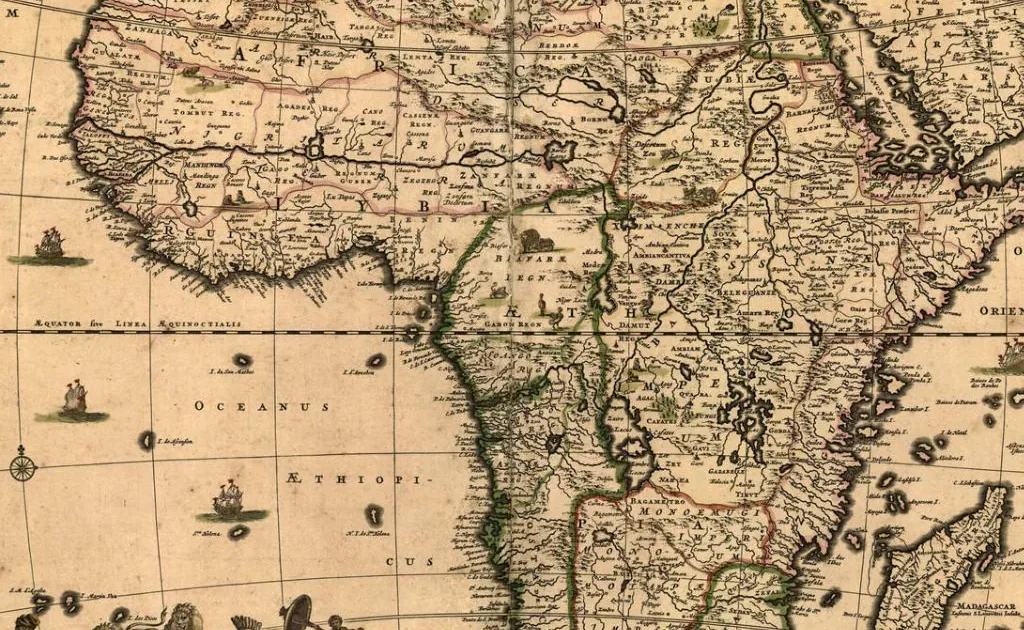
The history of Christianity in Africa is older than the history of Christianity in most of Europe. That statement is not rhetorical provocation; it is a historical fact that the documentary record supports at every turn. When the Apostle Paul was still preaching in the synagogues of Asia Minor, there were already Christians in Egypt. When Augustine of Canterbury was baptising the pagan Anglo-Saxons of Britain in 597 AD, the churches of North Africa had already produced theological giants whose writings had long since shaped the entire Christian world. When the great cathedrals of medieval Europe were still centuries from being conceived, an Ethiopian king named Lalibela was ordering the carving of eleven churches from solid volcanic rock, structures that still stand today.
Yet the common telling of Christianity in Africa begins with European missionaries arriving on the continent in the 19th century, as though the eighteen centuries of African Christian history before that moment were merely background. This document exists to correct that record.
What follows is the full history of the Christian faith in Africa: where it came from, how it grew, what nearly destroyed it, how it survived, and what it has become.
I. The Continent at the Birth of Christ
To understand how Christianity took root in Africa, one must first understand the Africa that existed at the time of Jesus Christ. The continent was not the peripheral landmass that later European cartographers and colonial administrators imagined it to be. In the first century AD, northeastern and northern Africa were among the most cosmopolitan, economically active, and intellectually sophisticated regions of the known world.
Egypt, following the fall of Cleopatra and the suicide of Mark Antony in 30 BC, had become a Roman province, but it was no ordinary province. It was the breadbasket of the empire, producing the grain that fed Rome. Its capital, Alexandria, was the second-largest city in the Roman world, home to the greatest library in antiquity, and a meeting point of Greek philosophical tradition, Egyptian religious practice, and a Jewish community so large and influential that Philo of Alexandria emerged from it to produce one of the most sophisticated bodies of theological literature of the pre-Christian era.
To the south of Egypt lay the Kingdom of Kush, centred at Meroe in modern Sudan: a sovereign Nubian state with its own distinct written script, its own architectural tradition of pyramids, and a system of governance that placed women in positions of extraordinary authority. The rulers known as Kandakes (rendered in the King James Bible as ‘Candace’) were not merely titular queens but active political and military powers.
Further south and east, in the highlands of what is now Ethiopia and Eritrea, the Kingdom of Aksum was ascending rapidly. By the first century AD, Aksum had become one of the great trading empires of the ancient world, controlling commerce between the Roman Empire and India across the Red Sea. Aksumite merchants were familiar figures in the ports of Arabia, India, and the eastern Mediterranean. The kingdom minted its own gold, silver, and bronze coinage, a mark of sovereign economic power that very few polities in the ancient world could claim.
To the northwest, Carthage (modern Tunisia) and Cyrenaica (modern Libya) were deeply integrated into the Mediterranean world. Carthage, rebuilt by Rome after the catastrophic Punic Wars, had become a major Latin-speaking urban centre. Cyrenaica maintained a substantial and influential Jewish community with close ties to Jerusalem.
This was the Africa into which Christianity was born.
II. The African Presence in the Gospel Narrative
The relationship between Africa and the person of Jesus Christ begins before his public ministry. The Gospel of Matthew records that following his birth in Bethlehem, the infant Jesus was carried by his parents into Egypt to escape the murderous decree of Herod (Matthew 2:13-15). Africa, in the first act of the New Testament narrative after the nativity, provides sanctuary.
Africa appears again at the final act of the Gospel narrative. On the road to Golgotha, as Jesus collapsed under the weight of the cross, Roman soldiers seized a man who was passing by and compelled him to carry it. His name was Simon, and he was from Cyrene (Matthew 27:32; Mark 15:21; Luke 23:26). Cyrene was the capital of the Roman province of Cyrenaica, situated in what is now northeastern Libya. His sons, Alexander and Rufus, are mentioned by name in Mark’s account, suggesting they were personally known to the early Christian community to whom that Gospel was addressed. The tradition that Rufus is the same person greeted by Paul in Romans 16:13 as ‘chosen in the Lord’ has been held since antiquity.
The book of Acts documents two further African encounters with the infant Christian movement that carry enormous historical weight. The first occurs in Acts 2:10, where among the crowds assembled in Jerusalem on the day of Pentecost are listed people from Egypt and the parts of Libya belonging to Cyrene. Africans were present at the founding moment of the Church.
The second encounter is more consequential. In Acts 8:26-40, Philip the Evangelist is directed by an angel to a desert road leading from Jerusalem to Gaza, where he meets a man of extraordinary social standing: a senior treasury official in the court of the Kandake of Ethiopia, returning from a pilgrimage to Jerusalem and reading from the scroll of Isaiah. Philip explains the passage, the official accepts the message of Christ, and requests baptism. The Ethiopian eunuch represents not only one of the earliest recorded Gentile conversions to Christianity, but the first documented missionary encounter between the Gospel and the African interior. He returned home carrying the faith before any organised church had been planted in Greece, in Rome, or in any part of Western Europe.
III. The Planting of the Church: Egypt and the Tradition of Mark
The most ancient and persistent tradition of early African Christianity attributes the founding of the Church in Egypt to John Mark, the author of the second Gospel and companion of both the Apostle Paul and the Apostle Peter. According to this tradition, recorded by Eusebius of Caesarea in his Ecclesiastical History (written in the early 4th century), Mark travelled to Alexandria following his separation from Paul, preached the Gospel there, won his first convert, a cobbler named Anianus, and planted churches across Egypt and Libya before being martyred in Alexandria in 68 AD.
The tradition has its scholarly debates. Some historians have questioned the specifics of Mark’s Egyptian mission, noting the relative silence of the earliest written sources. Yet the sheer sophistication and antiquity of the Alexandrian Christian community by the late 1st century is difficult to account for without some form of apostolic foundation. By the mid-2nd century, Alexandria was already producing Christian theologians of the first rank, which presupposes decades of prior institutional development.
The church that Mark reportedly founded would, within two centuries, become the intellectual capital of global Christianity. No city in the ancient world would shape Christian thought more deeply than Alexandria.
IV. The North African Church Fathers: The Making of Christian Theology
Between the late 2nd century and the early 5th century, the Christian Church in Africa north of the Sahara produced a concentration of theological and intellectual talent that has never been matched in any single region, before or since. Without the African Church Fathers, Christian doctrine as it is understood across all traditions would simply not exist in its current form.
Tertullian of Carthage (c. 155-240 AD)
Tertullian was the first major Christian writer to work in Latin rather than Greek, essentially creating the vocabulary of Western Christian theology. The words ‘Trinity,’ ‘substance,’ and ‘sacrament’ as theological concepts entered the Christian lexicon through his Latin formulations. His legal training gave his theological writing a precision and combativeness that shaped theological argument for centuries after his death.
Clement of Alexandria (c. 150-215 AD)
Clement led the Catechetical School of Alexandria, one of the world’s first institutions of Christian higher learning. He worked to demonstrate that Greek philosophical learning, and Platonism in particular, was not the enemy of the Christian faith but a preparatory discipline that could lead the educated mind toward Christ. In doing so, he laid the foundations for the long tradition of Christian intellectual engagement with secular philosophy.
Origen of Alexandria (c. 185-254 AD)
Origen was perhaps the most prolific scholar the ancient Christian world produced. He wrote commentaries on virtually every book of the Bible, developed the first systematic presentation of Christian theology in De Principiis, and produced the Hexapla, an extraordinary critical edition of the Old Testament placing six versions of the text in parallel columns. His method of allegorical biblical interpretation influenced Christian scholarship for over a thousand years.
Cyprian of Carthage (c. 200-258 AD)
Cyprian served as Bishop of Carthage during the savage Decian and Valerian persecutions and developed the theology of the Church as a unified, episcopal institution in ways that shaped Roman Catholic ecclesiology permanently. He was beheaded during the Valerian persecution in 258 AD and is venerated as a martyr across multiple Christian traditions.
Athanasius of Alexandria (296-373 AD)
Athanasius stood almost alone against the imperial weight of the Arian heresy, which denied the full divinity of Jesus Christ and had attracted the support of multiple Roman emperors. His phrase ‘Athanasius contra mundum’ (Athanasius against the world) became proverbial. His defence of Trinitarian orthodoxy at the Council of Nicaea in 325 AD, and during the decades of exile that followed, determined the theological direction of global Christianity.
Augustine of Hippo (354-430 AD)
Augustine was born in Thagaste, modern Souk Ahras in Algeria, to a Berber mother named Monica and a Roman father named Patricius. He was, by ancestry, experience, and formation, an African man. His autobiographical Confessions remains one of the most widely read books in human history. His theological works, particularly The City of God and his treatises on grace and free will, became so foundational to Western Christian thought that they essentially defined the agenda of theological debate in the Western church for the next thousand years.
Beyond these giants, the record shows that by 200 AD there were multiple local Christian churches across North Africa. A church council held in Carthage around 220 AD was attended by over 70 bishops, indicating a faith that had spread far beyond coastal cities. By the early 4th century, there were more than 250 bishops of African descent within the Church, a statistic that alone testifies to the extraordinary depth and density of Christianity’s African penetration.
V. The Kingdom of Aksum: Africa’s First Christian State
While the North African churches were shaping the intellectual architecture of global Christianity, a parallel and equally remarkable story was unfolding in the Horn of Africa.
The conversion of the Kingdom of Aksum to Christianity in the early 4th century is one of the most consequential events in African history. The central figures in this story are Frumentius and his companion Aedesius, two young men from the Eastern Mediterranean who were travelling through the Red Sea region when their ship was seized and most of its crew killed. They were taken to the royal court of Aksum as servants.
They rose to positions of considerable influence. Frumentius gained the confidence of the royal family and was entrusted with significant administrative responsibilities. During this period, he made contact with Roman Christian merchants trading in Aksum and facilitated their ability to gather for worship. When the young king Ezana came of age, Frumentius was released, but instead of returning home, he travelled to Alexandria and requested that the great bishop Athanasius send a bishop for the growing Christian community in Aksum. Athanasius’s response, recorded in his own letters, was to consecrate Frumentius himself as the first bishop of Aksum.
Frumentius returned to Aksum and, through his proximity to the royal court and his relationship with King Ezana, presided over what became the official Christianisation of the kingdom. Inscriptions from Ezana’s reign show a clear transition: early inscriptions invoke pre-Christian deities, while later ones give glory to ‘the Lord of All’ and ‘the Father, the Son and the Holy Spirit.’ By approximately 330 AD, Aksum had become one of the first sovereign states in world history to officially adopt Christianity as its national religion, predating the full Christianisation of the Roman Empire under Theodosius I.
The Aksumite Church developed its own distinctive theological tradition, its own liturgical language in Ge’ez, its own monastic institutions, and its own canon of scripture that includes several books absent from the Western and Eastern Christian Bibles, most notably the Book of Enoch and the Book of Jubilees. The Ge’ez liturgy that Frumentius helped establish is still used in the Ethiopian Orthodox Tewahedo Church today, making it one of the oldest continuously practised Christian liturgies in the world.
VI. The Nubian Churches: Christianity’s Southern Shield
Between Egypt and Aksum lay the ancient land of Nubia, divided in late antiquity into three kingdoms: Nobatia in the north, Makuria in the centre, and Alodia in the south. Christianity reached these kingdoms later than Egypt or Aksum, with the major missionary efforts occurring in the 6th century AD.
The historical record, drawn primarily from the Byzantine historian John of Ephesus, describes a fascinating episode of ecclesiastical diplomacy. Two rival missions, one sent by the Chalcedonian Byzantine Emperor Justinian and another sent by his Monophysite wife Empress Theodora, were dispatched to Nubia at roughly the same time, each seeking to win the Nubian kingdoms to their respective theological positions. Theodora’s mission, led by a bishop named Julian, reportedly arrived first and won the northern kingdom of Nobatia to the Monophysite position aligned with Egypt.
By the late 6th century, a second missionary named Longinus had carried the faith to the southernmost kingdom of Alodia, completing the Christianisation of the Nile corridor from Egypt deep into modern Sudan. The Nubian kingdoms maintained their Christian identity against the expanding Islamic world for over seven centuries, an extraordinary feat of cultural and religious endurance that the historical record has largely failed to celebrate.
VII. The Eclipse: Internal Fracture and the Coming of Islam
The African Church in the 5th and 6th centuries was simultaneously at the height of its intellectual influence and deeply wounded by internal conflict. The Council of Chalcedon in 451 AD, which sought to settle the long-running theological debate about the nature of Christ, instead deepened a rift between the Egyptian and Ethiopian churches on one side and the Roman and Byzantine churches on the other.
The Coptic and Ethiopian churches rejected the Chalcedonian formula, maintaining that Christ had a single, unified nature rather than the two distinct natures that Chalcedon defined. This was not merely a theological disagreement; it was also a political one, reflecting the resistance of the African churches to having their theological positions dictated by imperial Constantinople. The African churches and the Byzantine Church became, in practice, separated communions.
Within North Africa, an even more destructive division had emerged in the previous century. The Donatist controversy, rooted in the Diocletian persecution of 303-305 AD, split the North African Church into two bitterly hostile camps for over a century. The Donatists maintained that clergy who had surrendered scriptures to Roman authorities during the persecution had permanently forfeited their ability to perform valid sacraments. The Catholic position, articulated most powerfully by Augustine, was that the validity of the sacraments depended on Christ, not on the moral condition of the minister.
The controversy produced a century of mutual recrimination, periodic violence, and the diversion of enormous theological energy into internal conflict. As the North African Church fought with itself, it was profoundly ill-prepared for what came next.
The Arab Conquest (639-710 AD)
In 639 AD, seven years after the death of the Prophet Muhammad, an Arab army under Amr ibn al-As crossed into Egypt. The main Byzantine army was defeated at the Battle of Heliopolis in 640 AD, and Alexandria fell the following year. The Arab advance then swept westward along the North African coast with remarkable speed, taking Cyrenaica (Libya), then Carthage (Tunisia), which fell in 698 AD. By 710 AD, the entire coastline of North Africa from Egypt to the Atlantic Ocean was under Arab control.
The consequences for North African Christianity were catastrophic but gradual. The early Arab governors generally permitted Christians to continue worshipping, though they imposed the jizya, a poll tax on non-Muslims, and forbade the construction of new churches. Over the following centuries, a combination of conversion incentives, cultural Arabisation, and periodic repression steadily reduced the Christian population. The trajectory of decline was stark: North Africa had approximately 40 bishops in 700 AD. By 1050, that number had fallen to six. By 1300, there was a single bishop left. By the 15th century, the organised Christian community in North Africa outside Egypt had ceased to exist.
Egypt was different. The Coptic Church survived under Arab and later Ottoman rule through a combination of communal tenacity, the distinctive Coptic script and liturgy that preserved a cultural identity separate from Arabic, and the remarkable institution of the Coptic papacy, which provided continuous institutional leadership across thirteen centuries of political subjugation. The Coptic Church exists today as a direct, unbroken continuation of the church that Origen and Athanasius served.
Ethiopia survived for different reasons. The mountainous geography of the Ethiopian highlands made military conquest extremely difficult. The deep monastic tradition of the Ethiopian Orthodox Church, anchored in institutions like the monastery of Debre Damo founded in the 6th century, gave the faith roots in the countryside rather than merely in coastal cities vulnerable to naval power. And the memory of the Aksumite kingdom’s early hospitality to the first Muslim refugees, who fled Mecca in 615 AD and were sheltered under the Negus Ashama ibn Abjar, created a tradition of mutual restraint between Ethiopia and the early Islamic world that provided the Christian kingdom a degree of protection unavailable to the North African churches.
VIII. The Portuguese Missions: A Second Opportunity Squandered
It was more than seven centuries after the Arab conquest before Christianity made a serious second attempt to establish itself in sub-Saharan Africa. The vehicle for this attempt was Portugal.
Prince Henry, known to history as Henry the Navigator, launched Portugal’s systematic exploration of the African coast in the early 15th century. His motives were a mixture of commercial calculation, crusading religious ambition, and genuine scientific curiosity. By 1415, Portuguese forces had captured Ceuta from the Moors, and Henry had turned his attention southward, seeking a sea route that would bypass the Muslim-controlled land trade routes and open direct access to the gold of West Africa and the spices of India. By the 1480s, Portuguese ships were trading with the Kingdom of Kongo in modern Angola. In 1487, Bartolomeu Dias rounded the Cape of Good Hope, and Vasco da Gama completed the sea route to India in 1498.
The Portuguese brought missionaries with them, and initially there were genuine signs of success. The Manikongo, or king, of the Kongo kingdom, Nzinga a Ntinu, was baptised in 1491 and took the Christian name Joao. His son Afonso I was an even more committed Christian ruler who spent decades attempting to build a genuinely Christian state in Kongo, corresponding directly with the King of Portugal and the Pope, establishing schools and churches, and seeking to reform Kongolese society along Christian lines. The story of Kongo is among the most poignant episodes in the entire history of African Christianity: a kingdom that made a genuine, sustained effort to Christianise itself from within, only to be systematically undermined by the very Christian kingdom whose faith it had adopted, as Portugal’s overwhelming economic interest in the slave trade took precedence over any missionary concern.
Along the West African coast, Portuguese missionaries made contact with the Kingdom of Benin and the Kingdom of Warri. The Oba of Benin received missionaries and permitted them to operate, and for a time a chapel stood in Benin City. But these outposts had no deep roots. They depended entirely on the patronage of rulers, were staffed by missionaries who neither understood the languages nor the cultures of the people, and were fatally compromised by their association with the slave trade. By the 18th century, they had all but disappeared.
The structural flaws were numerous and well-documented. The Portuguese missionaries confused the conversion of rulers with the conversion of peoples, presented Christianity in European cultural clothing that felt alien to Africans, over-estimated the influence of commercial and political incentives on genuine religious commitment, and failed entirely to raise up a generation of local church leaders who could sustain the work after the Europeans departed. Some Portuguese clergy, chronically underfunded, became involved in the slave trade themselves to support their own maintenance. The language barrier was never adequately addressed. And the home church in Portugal consistently sent its least capable priests to Africa, reserving its best for more prestigious appointments closer to home.
IX. The 19th Century: The Permanent Planting
The definitive and permanent establishment of Christianity in sub-Saharan Africa did not grow primarily from European missionary initiative, though that initiative was significant. It grew from one of the most extraordinary events in African cultural history: the return home of freed captives.
The British Parliament abolished the transatlantic slave trade in 1807. The Royal Navy’s West Africa Squadron then spent the following decades intercepting illegal slave ships and landing the freed captives at Freetown in Sierra Leone, a colony established specifically as a home for freed Africans. These returnees, many of Yoruba, Igbo, Fon, and other West African origins, were educated in the mission schools of Sierra Leone. Many of them embraced Christianity deeply, not as a colonial imposition but as the faith of the community that had rescued them from the most brutal experience imaginable. They called themselves Saros (from Sierra Leone), and they understood their faith as their own possession, not a foreign loan.
When the dynamics of West African politics made it possible for them to return to their homelands in the 1830s and 1840s, they carried Christianity with them as an indigenous inheritance. It was in this context that organised Christian mission to what is now Nigeria and Ghana began in earnest. The Church Missionary Society, the Wesleyan Methodists, the Scottish Presbyterians, the American Baptists, and the Roman Catholic missions all established themselves in West Africa in the middle decades of the 19th century.
In East Africa, David Livingstone’s journeys into the interior of Central Africa from the 1840s through his death near Lake Bangweulu in 1873 opened vast regions to subsequent mission activity and generated enormous public interest in Britain for the cause of African evangelisation. In Southern Africa, the London Missionary Society and the Paris Evangelical Missionary Society worked among the Xhosa, the Tswana, and eventually the Zulu and other peoples.
The Definitive African Voice: Samuel Ajayi Crowther
The figure who most perfectly embodied the new character of African Christianity in the 19th century was not a European at all.
Samuel Ajayi Crowther was born around 1809 in Oshogun, a Yoruba town in what is now Oyo State, Nigeria. At roughly twelve years of age, he was captured in a Fulani raid, sold multiple times, and eventually placed aboard a Portuguese slave ship. The ship was intercepted by the British Navy, and Crowther was landed in Sierra Leone, where he received an education from the Church Missionary Society and was baptised in 1825.
He returned to Yorubaland as part of the Niger Expedition of 1841, published the first comprehensive grammar and vocabulary of the Yoruba language in 1843, and subsequently translated the entire Bible into Yoruba. In Canterbury Cathedral on June 29, 1864, he was consecrated as the first African bishop of the Anglican Church.
Crowther’s achievement was not merely ecclesiastical. His translation of the Bible into Yoruba was an act of cultural preservation and empowerment: it established a written standard for the Yoruba language at a moment when colonial administrators were treating African languages as obstacles rather than resources. His insistence that the Gospel must be communicated in African languages by African ministers ran directly against the grain of prevailing European missionary paternalism, and history has vindicated him entirely.
From its coastal bases in Badagry, Lagos, and Abeokuta, Christianity spread into the interior of West Africa with considerable speed through the second half of the 19th century. In the east, missions established themselves at the strategic river port of Onitsha, where they worked dynamically among the Igbo people. The Catholic missionary orders, including the White Fathers founded in 1868, pushed into regions where Protestant missions had not yet reached.
X. The 20th Century: The African Church Finds Its Own Voice
The 20th century in Africa was defined by two parallel and sometimes intertwined movements: the political struggle for independence from colonial rule, and the spiritual struggle for independence from colonial Christianity.
The African Independent Church movement had roots in the late 19th century, when African ministers and congregants began separating from European mission churches over questions of cultural authenticity, racial equality, and ecclesiastical autonomy. In South Africa, Nehemiah Tile founded the first recognised African Independent Church in 1884 when he broke from the Wesleyan Methodist mission to form the Thembu National Church. The Ethiopian movement, named for the biblical promise of Psalm 68:31 that Ethiopia shall soon stretch out her hands unto God, spread rapidly, producing dozens of African-led denominations by the turn of the century.
The Aladura Movement and the Birth of African Pentecostalism
In Nigeria and across West Africa, the most spiritually explosive expression of African Christian independence came with the Aladura movement, a Yoruba word meaning ‘people of prayer.’ The movement emerged in the late 1910s and intensified dramatically during the influenza pandemic of 1918-1919, when the prophetic ministry of a group of young Anglicans in Ijebu-Ode demonstrated the power of prayer and anointed water in the face of a disease that was killing thousands.
The subsequent revival led by Joseph Babalola in 1930-1931 drew massive crowds across Yorubaland and resulted in the establishment of the Christ Apostolic Church, one of the founding Aladura bodies. These churches combined deep biblical literacy with African musical traditions, a theology of healing and divine intervention that resonated with African cosmological understandings, and a spirit of prayer that gave ordinary believers direct access to spiritual power without the mediation of European cultural forms. They were, in every meaningful sense, the first authentically African expression of the Pentecostal tradition, and they developed largely independently of the American Pentecostalism that emerged from the Azusa Street revival of 1906.
The Charismatic Wave: Nigeria and the Global Surge
The second half of the 20th century saw the emergence of what scholars call the charismatic or neo-Pentecostal movement in Africa. In Nigeria, the campus fellowships of the 1970s, particularly the Scripture Union and the Christian Union movements, produced a generation of young graduates who had embraced the faith entirely on their own terms. From these fellowships emerged the leaders of institutions that would become among the largest churches on earth.
The Redeemed Christian Church of God, under the leadership of Pastor Enoch Adeboye, grew from a small Lagos congregation into a global movement with presence in over 190 countries. The Living Faith Church under Bishop David Oyedepo, the Deeper Life Bible Church under Pastor William Kumuyi, and the Mountain of Fire and Miracles Ministries under Dr. Daniel Olukoya similarly became institutions of global Christian significance, all rooted in the Nigerian soil.
XI. The African Church Today: A Statistical Reversal
The story of Christianity in Africa over the past century is, in statistical terms, the most dramatic religious transformation in recorded history. In 1900, there were approximately 9 million Christians on the African continent, representing roughly 9 percent of the total population. By 2020, that number had grown to over 685 million, representing approximately half the population of the continent. Africa is now home to the largest and fastest-growing Christian communities on earth.
This growth has reversed the historic direction of Christian mission. African churches are now sending missionaries to Europe, North America, and Asia. The Nigerian diaspora has planted churches in London, Houston, Toronto, and Seoul. The Ghana Church of Pentecost operates in over 100 countries. The Ethiopian Orthodox Church, which once struggled to maintain its independence against internal and external pressure, now has a significant diaspora presence across the Western world.
Philip Jenkins, in his landmark study The Next Christendom published in 2002, noted that the centre of gravity of global Christianity had already shifted definitively to the global south, and Africa stood at the heart of that shift. The theological energy, the evangelical urgency, and the sheer numerical weight of African Christianity are now among the most significant facts in global religious life.
The continent that provided sanctuary for the infant Christ, that gave the Church its theological foundations in Tertullian and Augustine, that produced the first Christian empire in Aksum, and that survived centuries of Islamic conquest, colonial paternalism, and cultural suppression has emerged in the 21st century as one of the primary engines of global Christian mission.
That is not a remarkable turn of events. For those who know the full history, it is the story completing its arc.
References & Further Reading
Primary and Ancient Sources
- Eusebius of Caesarea. Ecclesiastical History (Historia Ecclesiastica), c. 313 AD. Book II, Chapter 16.
- Athanasius of Alexandria. Apologia ad Constantium and Historia Arianorum, c. 355-357 AD.
- John of Ephesus. Ecclesiastical History, Part III. Trans. R. Payne Smith. Oxford, 1860.
Academic Books and Monographs
- Frend, W.H.C. The Donatist Church: A Movement of Protest in Roman North Africa. Oxford: Clarendon Press, 1952.
- Frend, W.H.C. Martyrdom and Persecution in the Early Church. Oxford: Blackwell, 1965. p. 539.
- Dowley, T., Briggs, J.H.Y., et al. (eds.). The History of Christianity. Oxford: Lion Publishing, 1977. p. 90.
- Hastings, Adrian. The Church in Africa: 1450-1950. Oxford: Clarendon Press, 1994.
- Isichei, Elizabeth. A History of Christianity in Africa: From Antiquity to the Present. London: SPCK, 1995.
- Walls, Andrew F. The Missionary Movement in Christian History: Studies in the Transmission of Faith. Maryknoll: Orbis Books, 1996.
- Jenkins, Philip. The Next Christendom: The Coming of Global Christianity. Oxford: Oxford University Press, 2002.
Course Materials and Institutional Sources
- Fatokun, S.A. History and Doctrine of the Early Church. Ibadan: Enlcrownfit Publishers, 1999. pp. 62-67.
- Oshitelu, G.A. Expansion of Christianity. Abeokuta: Visual Resources Publishers, 2002. p. 1.
- Redeemed Christian Bible College. Church History II: The Advent and Expansion of Christianity in West Africa. Lagos: RCBC Course Material.
Journal Articles
- Rukuni, R. (2021). ‘Negus Ezana: Revisiting the Christianisation of Aksum.’ Verbum et Ecclesia, 42(1), Art. #2083.
- Rukuni, R. & Oliver, E. (2019). ‘A case for organic indigenous Christianity: African Ethiopia as derivate from Jewish Christianity.’ HTS Teologiese Studies, 75(1), Art. #5270.
- Castiglia, G. (2025). ‘Architecture, Liturgy, Chronology: Aksumite Christianity as a Cosmopolitan Paradigm.’ Project MUSE, pp. 368-374.
- Mepaiyeda, S.M. & Popoola, T. (2019). ‘The roles of indigenous missionaries and Christians in the expansion of Christianity in Nigeria, 1860-1969.’ Verbum et Ecclesia, 40(1), Art. #1785.
Statistical and Research Reports
- Pew Research Center. Global Christianity: A Report on the Size and Distribution of the World’s Christian Population. Washington DC: Pew Research Center, 2011.