When the Arab armies swept out of Arabia in the decade following Muhammad’s death in 632 AD, they entered a world that was overwhelmingly Christian. The territories they conquered in Syria, Palestine, Egypt, North Africa, Persia, and eventually Spain had been Christian for centuries. The cities of Jerusalem, Antioch, Alexandria, and Carthage were among the oldest and most celebrated centres of Christian life in the world. The theological tradition that the North African church had produced in Tertullian, Cyprian, Origen, Athanasius, and Augustine had shaped the intellectual architecture of the entire Christian world. The monasteries of Egypt had been the nurseries of Christian spirituality for three centuries.
Within one hundred years of Muhammad’s death, the majority of this ancient Christian world was under Islamic political authority. Within several centuries, much of it had become predominantly Muslim in population. The encounter between Christianity and Islam that produced this transformation is one of the most consequential series of events in religious history, and its consequences continue to shape the world in the 21st century.
I. The First Encounters: Arabia and the Christian World
The Arabian Peninsula from which Islam emerged was not isolated from the Christian world. The Byzantine Empire’s southern frontier ran through the Arab tribal confederacies of the Syrian desert, the Ghassanid Arabs in particular serving as a Byzantine client state and buffer zone. The Kingdom of Yemen in the south had experienced a century of alternating Jewish and Christian political dominance before the Islamic period, including a period of Aksumite Ethiopian Christian rule (525-575 AD) and a brief Persian occupation. The Syriac-speaking Christian tradition of Mesopotamia and Persia was geographically adjacent to Arabia throughout the formative Islamic period.
Muhammad himself had direct contact with Christians throughout his life. His wife Khadijah’s cousin Waraqa ibn Nawfal, who identified the first revelation as angelic, was a Christian. His companion Salman al-Farisi had been a Christian before converting to Islam. The delegation from the Christian community of Najran in southern Arabia visited Medina and engaged in theological dialogue with Muhammad, an encounter described in the Quran in Surah 3 (Al Imran). Muhammad’s letter to the Christian monks of St. Catherine’s Monastery on Mount Sinai, the authenticity of which has been debated but which the monastery has maintained as genuine for fourteen centuries, promised the protection of the Muslim community to the monastery and to Christian communities generally.
The Quranic View of Christianity
The Quran’s theological engagement with Christianity is extensive and theologically sophisticated. It affirms the prophethood and miraculous birth of Jesus (Isa ibn Maryam, Jesus son of Mary), his miracles including the healing of the blind and lepers and the raising of the dead, his ascension into heaven, and his role as a messenger of God. The Quran explicitly rejects two doctrines that it attributes to Christians: the claim that Jesus is the Son of God in a biological or ontological sense (understood in Islamic theology as a form of polytheism, shirk), and the doctrine of the Trinity understood as three separate gods. The Quran also denies the crucifixion, asserting in Surah 4:157 that Jesus was not killed or crucified but that it appeared so to the people, though Islamic scholars have interpreted this verse in multiple ways.
Christians and Jews are designated in the Quran as the People of the Book (Ahl al-Kitab), recipients of earlier divine revelation through the Torah and the Gospel, whose scriptures the Quran both affirms and corrects. The Quranic claim is that the original revelations given to Moses and Jesus were authentic, but that the communities who received them subsequently corrupted or misinterpreted them, and that the Quran represents the final, uncorrupted revelation restoring the original Abrahamic monotheism.
II. The Arab Conquests and the Christian World (632-750 AD)
The Fall of the Byzantine East
The speed of the Arab military conquest of the Byzantine eastern provinces in the 630s was made possible by a specific historical conjuncture. The Byzantine-Persian war of 602-628 AD had been the most destructive conflict between the two empires in centuries, devastating the economic and military resources of both. Syria and Palestine had been under Persian occupation for fifteen years before being recovered by the Emperor Heraclius, whose own resources were exhausted by the recovery campaign. The Byzantine provinces of Syria and Palestine were thus in a condition of economic devastation, military weakness, and political disorganisation when the Arab armies arrived.
The theological alienation of the eastern provinces from Constantinople was a further factor. The Monophysite and Miaphysite Christians of Syria, Palestine, and Egypt had been persecuted as heretics by the Chalcedonian Byzantine establishment since 451 AD. They had not forgotten and had not forgiven the Byzantine suppression of their theological position. For many of them, the Arab conquerors who imposed tribute but allowed them to worship as they chose were a genuinely better option than Byzantine rulers who required them to conform to a theology they considered false.
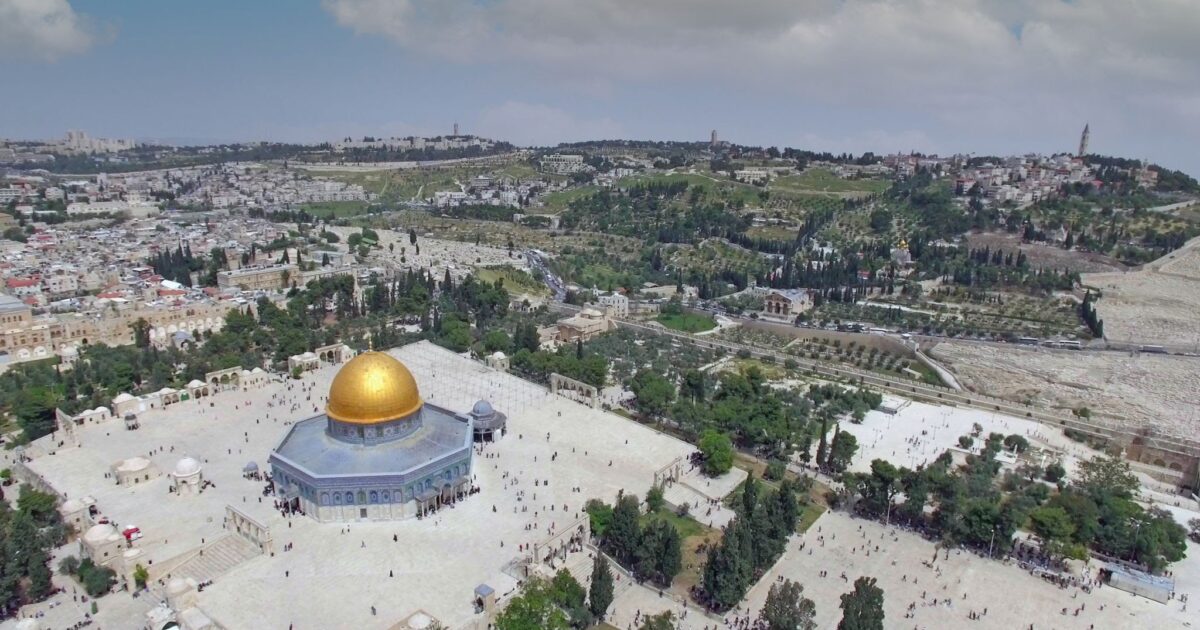
The Battle of Yarmouk in August 636 AD, in which Khalid ibn al-Walid’s Arab forces decisively defeated a Byzantine army in the gorge of the Yarmouk River in what is now northern Jordan, effectively ended Byzantine military power in Syria and Palestine. Jerusalem fell to the Caliph Umar ibn al-Khattab personally in 638 AD, the Patriarch Sophronius reportedly insisting on surrendering the city only to the caliph himself rather than to a subordinate. Umar’s entry into Jerusalem, on foot out of respect for the holy city, his refusal to pray in the Church of the Holy Sepulchre (reportedly saying that if he did so Muslims would later claim it as a mosque), and his grant of safe-conduct to the city’s Christian and Jewish inhabitants became the foundational narrative of Islamic Jerusalem.
The Conquest of Egypt and the End of African Christianity
The Arab conquest of Egypt, accomplished between 639 and 642 AD under Amr ibn al-As, was the most consequential single territorial loss of the early Christian world. Egypt was not merely a Roman province; it was the intellectual heartland of Christian theology. The loss of Alexandria, the city of Origen and Athanasius and Clement, removed the premier centre of Christian learning from the Christian world.
The initial Arab administration of Egypt was not genocidally destructive of the Christian community. Christians were permitted to continue worshipping, to maintain their churches, to conduct their community affairs under the authority of the Coptic Patriarch, and to practice their professions. They were required to pay the jizya, the poll tax imposed on non-Muslims, and certain restrictions were placed on the building of new churches and on the public display of Christian symbols. Over the following centuries, a combination of these financial and social pressures, the pull of conversion to the religion of the ruling class, and periodic waves of state-sanctioned violence and legal disenfranchisement produced a gradual but sustained demographic erosion in the Egyptian Christian population.
The sweep of the Arab armies across North Africa from Egypt westward through Libya, Tunisia, Algeria, and Morocco between 642 and 710 AD effectively ended the organised Christian presence in the region outside Egypt. The North African church, which had produced Tertullian, Cyprian, and Augustine, had by the 9th century been reduced to a handful of communities in the major coastal cities, and by the 11th century had virtually ceased to exist. Scholars continue to debate why the North African church, unlike the Coptic church in Egypt, failed to survive the Islamic conquest. The absence of a strong liturgical tradition in the local Berber languages, the dependence of North African Christianity on Latin and on the urban Romanised population that the Arab conquest disrupted, and the catastrophic loss of institutional leadership through massacre and exile all contributed.
The Conquest of Persia and the Eastern Christian Communities
The Arab conquest of the Sassanid Persian Empire, completed by approximately 651 AD, brought the Church of the East, the Syriac Christian tradition of Mesopotamia and Persia, under Islamic political authority. The Church of the East, whose bishops had presided over Christian communities from Iraq through Central Asia to India and China, underwent significant demographic contraction in the following centuries as conversion to Islam reduced the Christian population of Iraq. However, it survived as a significant community for centuries longer than the North African church, maintaining its Patriarchate in Baghdad and its network of communities across Asia.
III. The Character of Islamic Rule Over Christian Populations
The relationship between the early Islamic caliphates and the Christian populations under their authority was governed by the dhimmi system, a legal framework that extended protected status to Christians and Jews as People of the Book. The dhimmi contract, as it developed in Islamic jurisprudence, required non-Muslims to pay the jizya in exchange for protection of their lives, property, and right to worship, exemption from military service (which was a Muslim obligation), and the right to govern their own community affairs through their own religious leaders.
The practical application of the dhimmi system varied enormously across time, place, and ruling dynasty. At its best, it allowed substantial Christian and Jewish communities to maintain their institutional life, their religious practices, and their participation in the economic and intellectual life of the Islamic world for centuries. The court of the Abbasid caliphs in Baghdad employed Nestorian Christian scholars as physicians, translators, and advisers. The Islamic Golden Age was a collaborative achievement in which Muslim, Christian, and Jewish scholars worked together at the House of Wisdom. The Christian and Jewish communities of medieval Islamic Spain participated in a cultural flowering, the convivencia, that produced achievements in philosophy, medicine, poetry, and architecture that neither tradition could have achieved in isolation.
At its worst, the dhimmi system imposed social humiliations, economic disabilities, and physical restrictions that created a permanent second-class status and generated slow but steady pressure toward conversion. The requirement that dhimmis not build new churches higher than existing mosques, not ride horses (a status marker reserved for Muslims), not wear clothing indistinguishable from Muslim dress, and not ring church bells audibly enforced a structural humiliation designed to gradually erase the Christian presence from public life. The periodic episodes of dhimmi persecution, including the destruction of churches under the Fatimid Caliph al-Hakim in Egypt in the early 11th century (which directly precipitated the First Crusade by disrupting access to Jerusalem), and the Almohad persecutions in North Africa and Spain in the 12th century that forced both Christians and Jews to choose between conversion and exile, demonstrated the fragility of the protected status when political conditions changed.
IV. The Eastern Counterattack: The Byzantine Resistance
The Byzantine Empire, though stripped of its Syrian, Palestinian, and Egyptian provinces in the 7th century, did not collapse. It contracted, reorganised, and survived for another eight centuries until the fall of Constantinople in 1453 AD. The Byzantine resistance to Islamic expansion was the primary factor preventing the Islamisation of Eastern Europe and the Balkans during the early medieval period.
The two Arab sieges of Constantinople, in 674-678 AD and 717-718 AD, were defeated by the combination of the city’s formidable fortifications, the Byzantine navy’s deployment of Greek fire (a petroleum-based incendiary weapon that could burn on water), and in 718 AD, the military intervention of the Bulgarian Khan Tervel whose forces struck the Arab army in the rear. The failure to take Constantinople was among the most significant military outcomes of the early Islamic expansion, preserving the Byzantine capital and with it the Christian hold on the Aegean, the Balkans, and eventually the route into Central and Eastern Europe.
The Reconquista: Christianity Fights Back in Spain
The Christian reconquest of the Iberian Peninsula, the Reconquista, was one of the longest military and cultural campaigns in European history, spanning from the establishment of the Kingdom of Asturias in the early 8th century to the fall of Granada, the last Islamic kingdom in Spain, on January 2, 1492, the same year Columbus sailed west across the Atlantic.
The Reconquista was not a continuous military campaign but a sporadic series of advances, retreats, truces, and alliances that defies simple characterisation as either a religious war or a territorial conflict. Christian kings allied with Muslim rulers against other Christian kings. Muslim rulers employed Christian mercenaries. The legendary Rodrigo Diaz de Vivar, El Cid, the iconic figure of Castilian Christian chivalry celebrated in the 12th-century Cantar de Mio Cid, spent significant portions of his career in the service of Muslim rulers fighting against Christian opponents. The Santiago de Compostela pilgrimage, which drew Christian pilgrims from across Europe and became the primary vehicle of pan-European Christian solidarity with the Iberian churches, generated an intensity of religious motivation that the political and commercial realities of peninsular coexistence alone could not have sustained.
V. The Intellectual Encounter: Transmission and Transformation
Beyond the battlefield, the encounter between Christianity and Islam produced an intellectual exchange of incalculable historical consequence. The translation movement that brought Arabic-language scholarship into Latin in the 11th and 12th centuries, centred primarily on Toledo in Spain and on the Norman kingdom of Sicily, transferred to Western Europe the accumulated scientific, philosophical, and medical knowledge of the Islamic Golden Age and, through it, the Greek philosophical heritage that the Islamic scholars had preserved and extended.
The specific mechanism of transmission was the Arabic-to-Latin translation: scholars at the Cathedral School of Toledo, established as a translation centre after the Christian reconquest of the city in 1085 AD, worked through the following century to render Arabic texts of Aristotle, Euclid, Ptolemy, Galen, Ibn Sina (Avicenna), and Ibn Rushd (Averroes) into Latin. Gerard of Cremona alone is credited with translating over 80 Arabic works into Latin, including Ptolemy’s Almagest, Euclid’s Elements, and Ibn Sina’s Canon of Medicine.
The impact on Western Christian intellectual life was transformative. The recovery of Aristotle’s complete works, mediated through Arabic translations and commentaries, triggered the scholastic revolution of the 12th and 13th centuries. Thomas Aquinas’s synthesis of Aristotelian philosophy with Christian theology in his Summa Theologiae would not have been possible without the Arabic-language Aristotelian tradition that Ibn Rushd’s commentaries had made accessible. The European university as an institution, with its disputational methods, its curriculum organised around the liberal arts and the four higher faculties, and its practice of subjecting received authority to rational critique, was shaped at a fundamental level by the intellectual methods the Islamic scholarly tradition had developed.
VI. The Ottoman Empire and the Final Absorption of Byzantine Christianity
The Ottoman Turkish sultanate, which emerged in northwestern Anatolia in the early 14th century and expanded rapidly through the Balkans and across Anatolia, delivered the final blow to the Byzantine Empire with the conquest of Constantinople on May 29, 1453 AD. Sultan Mehmed II, who had been planning the conquest for years and directed the construction of the Rumeli Hisari fortress on the European shore of the Bosphorus specifically to cut off Byzantine supply lines, led an army of perhaps 80,000 against a defending force of approximately 7,000.
The last Byzantine Emperor, Constantine XI Palaiologos, died in the final defence of the city walls. Mehmed rode through the fallen city to the great church of Hagia Sophia, the finest building in the Christian world, and had it converted into a mosque. The patriarch of Constantinople was maintained in office under Ottoman authority and the Greek Orthodox Christian population of the city and the empire was organised as a millet, a protected religious community, under his jurisdiction, a form of institutionalised dhimmi status that allowed the Orthodox church to survive but under permanent political subjugation.
The fall of Constantinople sent shockwaves through the Christian world. Scholars fleeing the fallen city carried Greek manuscripts to Italy, contributing to the Renaissance’s engagement with Greek classical learning. Pope Nicholas V called for a crusade, as his predecessors had done for centuries, with similarly disappointing results. The Ottoman advance continued westward through the Balkans, threatening Central Europe and reaching the gates of Vienna in 1529 under Suleiman the Magnificent.
VII. The Long Co-existence: Where Christianity and Islam Lived Together
The encounter between Christianity and Islam was not only a story of warfare and theological dispute. It was also a story of co-existence, exchange, and mutual influence that produced some of the most sophisticated cultures in human history.
Al-Andalus: The Great Civilisational Experiment
Islamic Spain, al-Andalus, at its height under the Umayyad Caliphate of Cordoba in the 10th century, was the most sophisticated society in Western Europe. The Caliph Abd al-Rahman III (912-961 AD) presided over a court that rivalled Baghdad in its intellectual brilliance, maintaining a library reported to contain 400,000 manuscripts at a time when the largest library in Christian Europe held perhaps a few hundred. Cordoba itself had a population estimated at around 500,000, making it one of the largest cities in the world, with paved streets, public lighting, and a level of urban sanitation that was not matched in most of Christian Europe until the 19th century.
The Jewish philosopher Moses Maimonides (1138-1204 AD), born in Cordoba and writing in Arabic, produced philosophical and legal works of enduring importance to both Jewish and Islamic thought. The Muslim philosopher Ibn Rushd (Averroes, 1126-1198 AD), the most important medieval commentator on Aristotle, worked in Cordoba and Marrakesh. The Sufi mystic Ibn Arabi (1165-1240 AD), born in Murcia, produced a mystical theology that influenced both Islamic and Christian thought. These figures were products of the specific cultural environment that the Islamic-Christian-Jewish encounter of Iberia produced.
The Levant and the Long Tolerance
The Ottoman millet system, despite its fundamental inequality, sustained vulnerable but resilient Christian communities in Syria, Palestine, Lebanon, and Egypt for five centuries. The Maronite Christians of Lebanon, the Greek Orthodox of Syria and Palestine, the Armenian Christians, and the Coptic Christians of Egypt all maintained institutional life, educational traditions, and cultural creativity within the Ottoman framework. The Christians of the Levant were disproportionately represented in the commercial and professional classes of Ottoman cities, their fluency in European languages and their access to European diplomatic protection giving them advantages that produced a substantial Levantine Christian merchant class.
VIII. The Modern Period: Nationalism, Colonialism, and the New Encounter
The 19th and 20th centuries brought the encounter between Christianity and Islam into a new phase shaped by European colonial expansion, the dissolution of the Ottoman Empire, the emergence of Arab and Muslim nationalism, the founding of the State of Israel, and eventually the Cold War and its aftermath.
European colonial powers, which were predominantly Christian in their cultural self-understanding, occupied and administered Muslim-majority territories across the Middle East, South Asia, Southeast Asia, and Africa. The specifically Christian character of European colonialism was often muted in its formal expression, as colonial administrations generally avoided direct missionary work in Muslim areas for pragmatic reasons, but the association of Christianity with the colonial project was inescapable and generated lasting suspicion of Christian missions across much of the Muslim world.
The decline of Christian populations across the Middle East in the 20th and 21st centuries, accelerated by emigration, sectarian terrorism, and targeted campaigns of religious cleansing by extremist groups like Al-Qaeda and ISIS, has removed ancient communities from territories they had inhabited for nearly two millennia. The Christian population of Iraq declined from approximately 6 percent of the total in 2003 to under 1 percent by 2020. The Christian population of Syria was approximately 10 percent before the civil war beginning in 2011 and has been dramatically reduced by violent displacement and emigration. The once-substantial Christian communities of Egypt, Lebanon, and Palestine are under various degrees of pressure that their ancient ecclesiastical traditions have not previously faced in comparable form.
The 21st century has also seen a Muslim presence in Western Europe and North America of unprecedented scale, as migration from Muslim-majority countries has created substantial Muslim communities in countries with Christian majority populations or secular Christian cultural heritages. The encounter between Christianity and Islam that began with the Arab conquests of the 7th century continues, in new forms and new settings, in the suburbs of Paris, London, Detroit, and Toronto.
References & Further Reading
Academic Books and Monographs
- Hourani, Albert. A History of the Arab Peoples. Cambridge: Harvard University Press, 1991. https://www.hup.harvard.edu/catalog.php?isbn=9780674395657
- Kennedy, Hugh. The Great Arab Conquests. Philadelphia: Da Capo Press, 2007.
- Lapidus, Ira M. A History of Islamic Societies. 3rd ed. Cambridge: Cambridge University Press, 2014.
- Menocal, Maria Rosa. The Ornament of the World: How Muslims, Jews, and Christians Created a Culture of Tolerance in Medieval Spain. New York: Little, Brown, 2002.
- Fletcher, Richard. The Cross and the Crescent: Christianity and Islam from Muhammad to the Reformation. London: Allen Lane, 2003.
- Ye’or, Bat. The Decline of Eastern Christianity Under Islam. Madison: Fairleigh Dickinson University Press, 1996.
- Frend, W.H.C. The Rise of the Monophysite Movement. Cambridge: Cambridge University Press, 1972.
- MacCulloch, Diarmaid. A History of Christianity: The First Three Thousand Years. London: Allen Lane, 2009.
- Jenkins, Philip. The Lost History of Christianity. Oxford: Lion Hudson, 2008.
Primary Source Collections
- Peters, F.E. (ed.). A Reader on Classical Islam. Princeton: Princeton University Press, 1994.
- Constable, Olivia Remie (ed.). Medieval Iberia: Readings from Christian, Muslim, and Jewish Sources. Philadelphia: University of Pennsylvania Press, 2012.
Published by Church Archive | churcharchive.org
This document is part of the Church Archive World Historical Series. All rights reserved.